
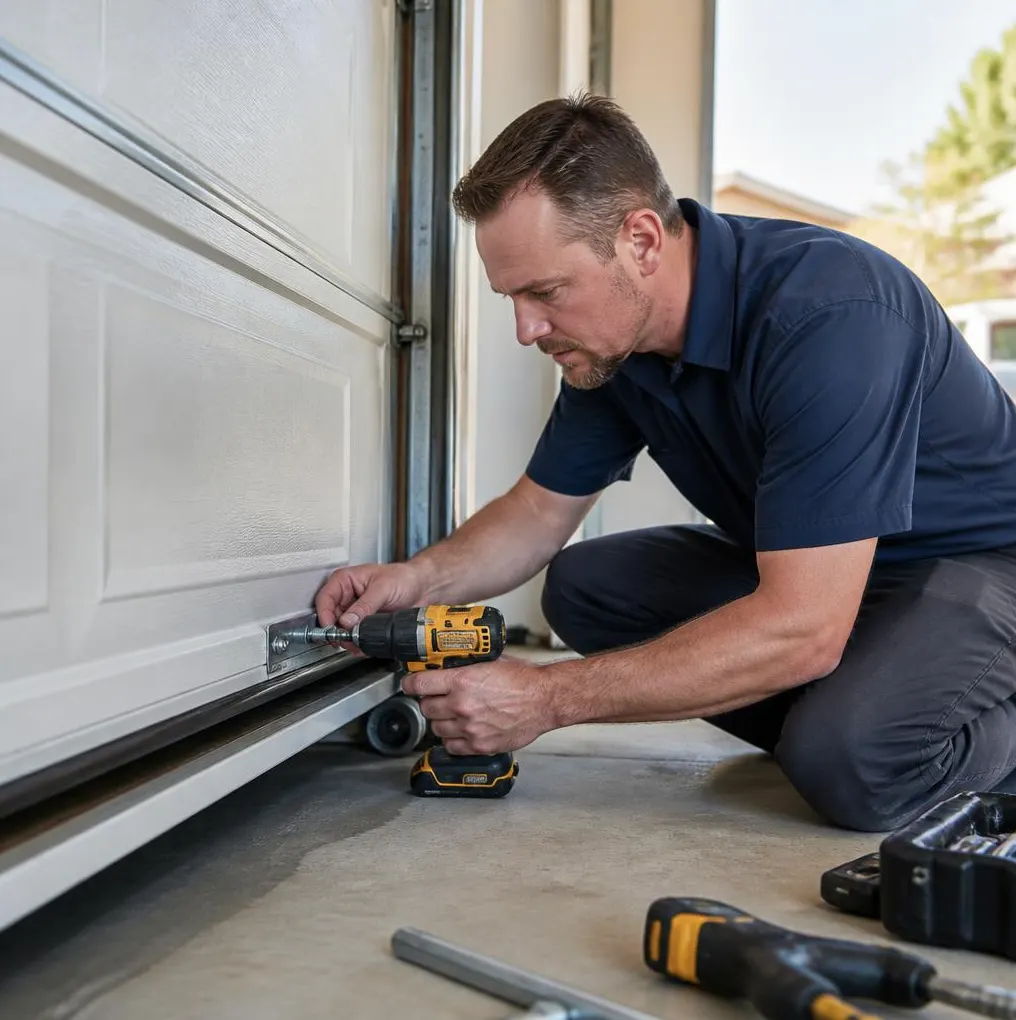
A garage door that's gotten louder over the summer doesn't fix itself over the winter. Left alone, that grinding or banging usually means metal rubbing against metal, and every open-close cycle wears the hardware a little more. Ignore it through another rainy season in the Sacramento area and you're not just living with noise under a bedroom or home office — you're often looking at a roller that finally seizes, a stripped gear in the opener, or a cable that jumps its drum at the worst possible time. A noisy door is cheap to fix today and expensive to fix after it fails.
Step 1: Figure Out What Kind of Noise You're Actually Hearing
Before you touch anything, run the door up and down a few times and listen. The type of noise tells you where to start.
- Grinding or scraping — usually worn rollers or a track that's out of alignment.
- Rattling — loose hardware: hinges, brackets, or the opener's mounting bolts.
- Squealing — dry hinges, rollers, or springs that need lubrication.
- A loud bang or clunk — stop using the door. This can mean a broken spring or cable, and it's not a noise-reduction job anymore; it's a safety issue.
- Low rumbling through the house — this is often less about wear and more about an old chain-drive opener transmitting vibration directly into the house frame, especially common in homes with the garage attached under a bedroom.
Step 2: Tools for the Cheap Fixes
Most of what follows can be done with things already in a garage toolbox:
- Socket wrench set
- Garage-door-specific lithium grease or silicone spray (not WD-40, which attracts dust and gums up over time — a real problem during Sacramento's dry, dusty summer and fall stretch)
- Rags
- Replacement nylon rollers, if needed
- Rubber isolation kit for the opener motor mount, if going that route
Step 3: Tighten Everything (15 Minutes, Zero Cost)
Garage doors cycle thousands of times a year, and every nut and bolt loosens a little with each cycle. Go panel by panel with a socket wrench and snug up the hinge bolts, the track brackets, and the bolts holding the opener rail to the ceiling. This alone eliminates a surprising amount of rattle, especially after temperature swings between hot inland summer days and cooler fall nights, which cause metal to expand and contract and hardware to work loose.
Step 4: Lubricate the Moving Parts
With the door closed, apply lubricant to the hinges, the roller stems (not the nylon wheels themselves), the springs, and the opener's chain or screw drive. Wipe off excess so it doesn't collect dust — the dry season leaves a fine layer of grit on everything in an open garage, and dust mixed with grease turns into a gritty paste that makes noise worse, not better.
Step 5: Replace Worn Rollers
If the rollers are cracked, flat-spotted, or visibly worn, this is the single biggest noise fix available to a homeowner. Nylon rollers run far quieter than old steel ones and are inexpensive. Replace one at a time: remove the roller bracket's retaining bolt, slide the old roller out, slide the new one in, and re-secure. Leave the bottom two rollers alone if they're attached near the cables — those sit close to spring tension and are where a technician should take over.
Step 6: Isolate the Opener Motor from the Frame
A lot of the noise people hear inside the house isn't the door itself — it's opener vibration traveling through the ceiling joists. A rubber isolation kit between the opener bracket and the frame can cut that transmitted noise noticeably. This is still a homeowner-level job with basic tools, though it helps to have a second person steady the opener while you swap the mounting hardware.
Step 7: When Cheap Fixes Aren't Enough — Consider a Belt-Drive Swap
If the opener itself is an older chain-drive unit, no amount of lubrication or tightening will get it quiet. Chain drives are mechanically loud by design. A belt-drive opener replaces the metal chain with a reinforced rubber belt, cutting operating noise dramatically. This is a worthwhile upgrade for homes where the garage sits under or next to a living space. It's also a reasonable project to tackle at the same time as other garage upgrades, including earthquake retrofit work many older Sacramento-area homes eventually need, since both involve opening up the same ceiling hardware.
Where Homeowners Should Stop and Call a Technician
Some repairs look simple but aren't:
- Springs and cables — these are under high tension and are the leading cause of serious garage door injuries. Don't touch them.
- Track realignment — a track that's bent or pulled away from the wall needs proper measurement and bracing.
- Opener motor or circuit board noise — grinding from inside the opener unit itself usually means a failing gear or motor, not a lubrication problem.
- Full belt-drive conversions — these involve rewiring safety sensors and recalibrating travel limits, which is worth having done correctly the first time.
When to Call Sacramento Overhead Door Co
If you've tightened, lubricated, and swapped rollers and the door is still loud — or if you hear that bang that signals a spring problem — it's time to call in a technician. Sacramento Overhead Door Co handles Garage Door Opener Service and full Spring Replacement, diagnosing whether the noise is coming from worn hardware, a failing motor, or tension components that need professional handling. We'll also tell you honestly whether a belt-drive upgrade makes sense for your setup before you spend money on one.
If your garage door has been getting louder all season, don't wait for the winter rain to make it worse. Call Sacramento Overhead Door Co, your local garage door company near Florin Rd, Sacramento, for fast, honest service.